
.avif)

Blog Summary / Key Takeaways
- White label bookkeeping lets firms offer a new service line without hiring.
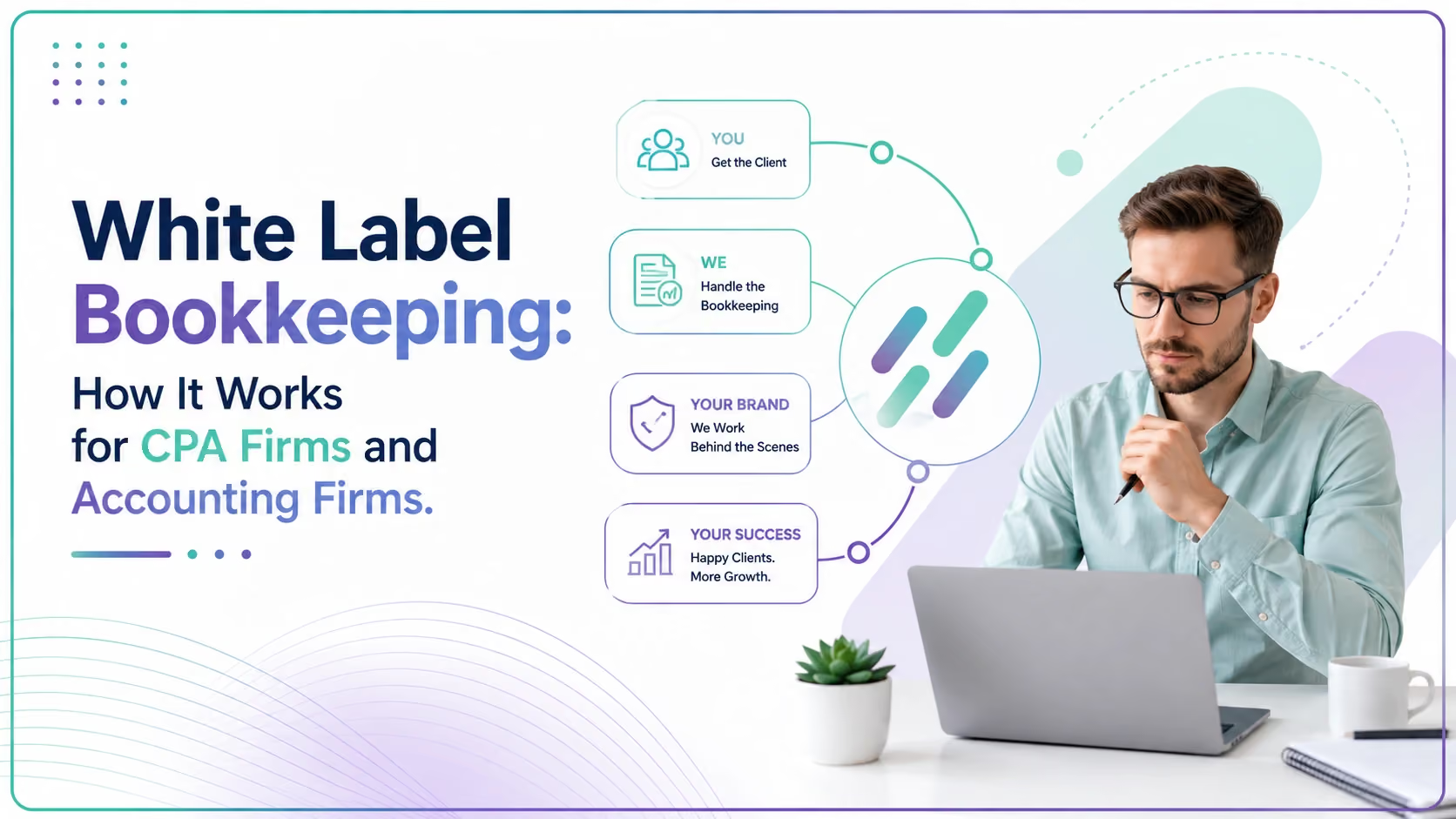
- Clients see only your firm's brand, with the provider working behind the scenes.
- It typically launches within four to six weeks, including onboarding of QuickBooks and bank connections.
- Pricing usually follows a flat fee, revenue share, or markup model, each with different tradeoffs.
- Your firm retains the client relationship and final review.
- It works well for tax-focused firms wanting to expand into bookkeeping without added headcount.
Introduction
A client asks if you can also handle their monthly bookkeeping, not just their tax return, and you have to say no.
You do not have the staff to add a bookkeeping service line, so the client goes and finds another provider for that work.
Now they have two firms, and there is a real chance the other provider eventually pitches them on tax prep too, putting client retention at risk.
White label bookkeeping solves this by letting you offer accounting services under your own brand name, without hiring anyone new.
This post explains how a white label accounting partner actually works, what the onboarding process looks like, and how pricing models compare.
What Is White Label Bookkeeping?
White label bookkeeping means a third-party white label partner performs the bookkeeping work, but it is delivered entirely under your firm's brand.
The client only interacts with your firm. They never know a separate white label accounting firm is handling the accounting tasks behind the scenes.
This differs from typical outsourced bookkeeping providers, where the arrangement may be visible to the client or handled through a co-branded process.
Most CPA firms use this model specifically to protect client relationships while adding accounting and bookkeeping services they could not staff on their own.
Why Are CPA Firms Adding White Label Accounting Solutions?
Clients increasingly want a single provider for both tax and ongoing bookkeeping, rather than managing two separate professional services relationships.
Firms that cannot offer accounting services risk losing tax clients to accounting companies that provide both services under one roof.
White label partnerships let a firm capture that additional revenue without the cost and time of hiring bookkeeping companies' worth of staff internally.
This model also allows firms to focus their own tax team on higher-value advisory services and tax planning, instead of stretching thin across bookkeeping tasks too.
Who Benefits Most From White Label Bookkeeping?
Tax-focused firms and mid size CPA firm operations looking to expand into monthly bookkeeping without building a new department benefit the most directly.
Firms with strong client relationships but limited bandwidth to manage additional staff also see a clear fit, including firms serving e commerce businesses with high transaction volume.
It also works well for firms testing whether bookkeeping is a viable service line before committing to in-house hiring or certified accountants on payroll.
When Does White Label Make Sense Versus Hiring Directly?
It makes sense when a firm wants to add the service quickly, without a multi-month hiring and training cycle.
It also fits firms uncertain about long-term demand, since white label arrangements typically scale without long-term staffing commitments.
Firms with high confidence in sustained bookkeeping demand may eventually transition to an in-house team over time, once business goals and volume justify it.
Where Does the Work Actually Get Done?
The bookkeeping work, including transaction coding, bank reconciliations, and accounts payable, is performed by the white label provider's dedicated team, typically an offshore or outsourced group.
Client communication, invoicing, and branded reports are formatted and delivered under your firm's name and branding, maintaining brand consistency throughout.
Your firm retains the client relationship and final quality review, while the provider handles the day to day, daily and monthly work in QuickBooks Online or QuickBooks Desktop.
How Does a White Label Bookkeeping Arrangement Work Step by Step?
The firm signs an agreement with the white label provider, defining scope, pricing, and branding requirements upfront to avoid hidden costs later.
Client files and access are set up so the provider's dedicated team can perform bookkeeping directly in the client's accounting software.
Monthly financial statements and other client facing reports are branded with the firm's logo before being sent to the client.
The firm's staff perform a final quality review before client delivery, maintaining oversight over the branded output and client data security.
What Does Onboarding Actually Involve?
Onboarding includes QuickBooks Online setup and bank connection, along with a review of the client's existing chart of accounts by the provider.
Expect more time investment during the first month of onboarding, since the provider is learning the client's specific accounting practices and reconciling accounts from scratch.
The onboarding process also establishes communication protocols and quality expectations between your firm and the white label partner, so client expectations are set clearly from day one.
Security measures around client data should be confirmed during this stage as well, particularly for any provider handling bank statements or payroll processing.
How Do White Label Bookkeeping Pricing Models Compare?
Most white label arrangements use one of three pricing structures: a per-client flat monthly fee, a revenue share model, or a markup over the provider's base rate.
A flat rate per client is generally the most predictable model for budgeting, since the cost does not fluctuate with what you charge the end client.
A revenue share model ties the provider's cut to your pricing, which can align incentives but makes costs harder to forecast as your rates change.
A markup model has the firm charging clients more than the provider's base rate to cover the margin, which is common among cpa firm partners scaling a new service line.
Whichever model you use, ask for transparent pricing upfront, since hidden costs in setup fees or per-transaction charges can erode the margin you expected.
What Services Are Typically Included in a White Label Model?
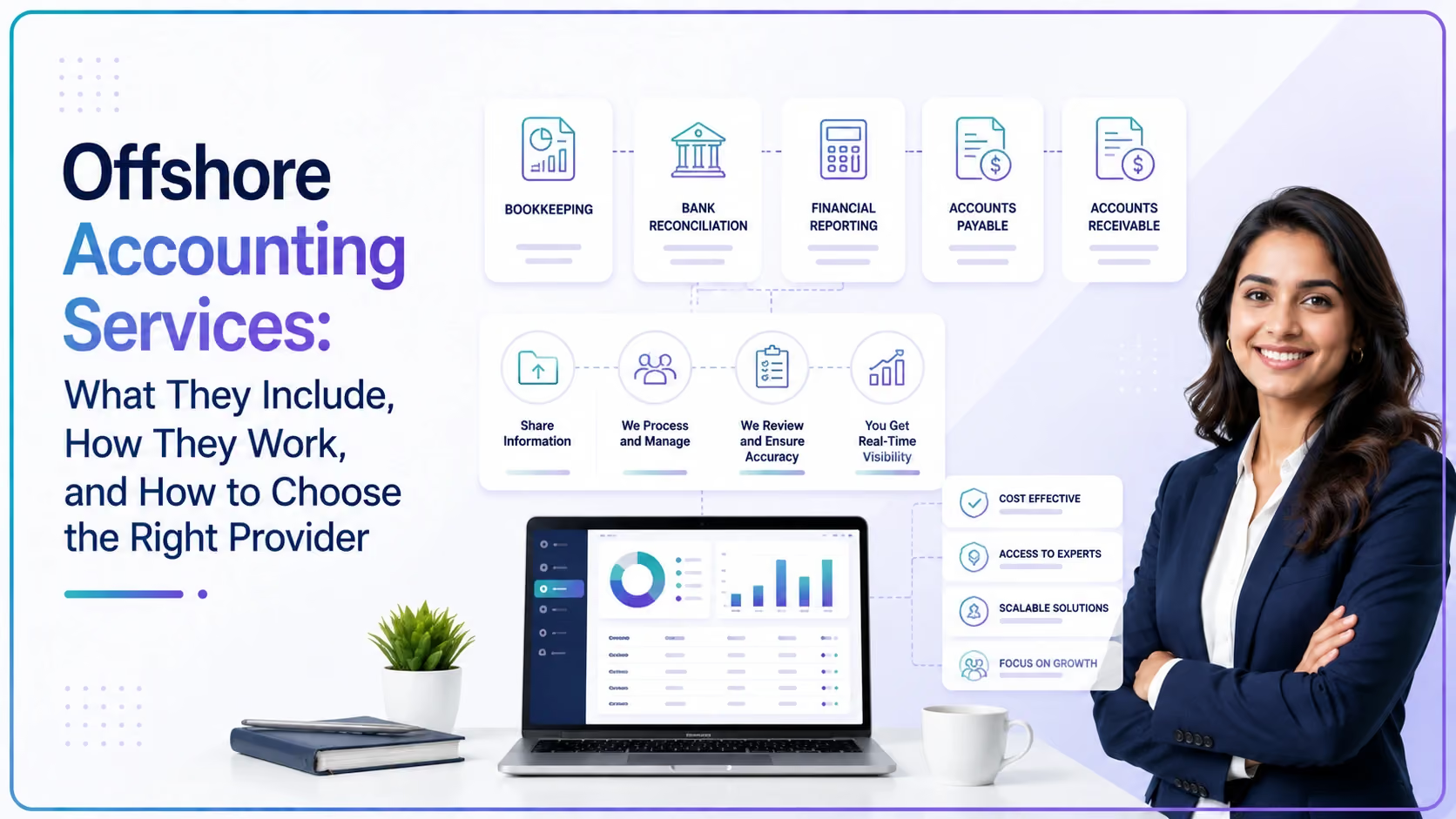
Most white label services cover the core monthly cycle: transaction coding, bank reconciliations, accounts payable, and producing a balance sheet and profit and loss statement each period.
Some providers extend into payroll processing or light tax preparation support, though this varies by white label partner and should be confirmed before signing.
Financial reporting deliverables typically include monthly financial statements formatted and branded for direct client delivery, not a raw export the firm has to reformat.
Firms should clarify exactly which financial records and reports are included versus billed as an add-on, since scope gaps here are a common source of friction later.
How Does This Affect Cash Flow and Client Retention?
Adding bookkeeping tends to give firms better visibility into a client's cash flow throughout the year, not just at tax season, which naturally opens the door to more advisory conversations.
This visibility also improves client retention, since a firm handling both tax and bookkeeping becomes harder for a client to leave than a firm handling only one service.
Firms that want more clients from referrals often find that bundling services this way makes their existing clients more likely to recommend them, simply because the relationship covers more ground.
Operating this way can also help a firm scale more cost effectively, since a single client relationship now generates two revenue streams instead of one, without doubling overhead.
What Should You Look For in a White Label Partner?
Ask specifically how the provider handles client data security, since bank statements and financial records are among the most sensitive information a firm handles.
Confirm turnaround time commitments in writing, especially heading into tax season when your own tax team will have less bandwidth to catch a slow provider.
Request references from other cpa firm partners already using the provider, ideally firms of a similar size and client mix to your own.
Clarify what happens if transaction volume spikes unexpectedly for a client, since pricing and capacity commitments should account for that rather than treating every month as identical.
Real Scenario: A Tax Firm Adding Bookkeeping in Six Weeks
A tax-focused firm in Florida had turned away bookkeeping requests from clients for over a year, citing capacity limits.
Three long-standing tax clients had started asking other providers about monthly bookkeeping services.
The firm partnered with a white label bookkeeping provider and launched the new service line within six weeks.
Clients received monthly financial statements branded entirely under the firm's name, with no visibility into the provider's involvement.
Within the first year, the firm added bookkeeping revenue from twenty-two clients without hiring a single new employee.
The firm's owner now views bookkeeping as a natural extension of the tax relationship, not a separate business decision.
Etisson White-Label vs. Direct Outsourcing vs. Software-Only Approach
Service Feature Overview
How Etisson Can Help
Etisson provides white label accounting solutions specifically built for CPA firms wanting to expand services without hiring.
Deliverables are branded entirely under your firm's name, with your staff retaining final review before client delivery, backed by a dedicated relationship manager on our side.
Clients contact your firm directly for anything they need. Etisson stays entirely behind the scenes, which protects the relationship you have built over years.
Firms typically see real cost savings compared to hiring a full-time bookkeeping team, since staffing, training, and management overhead sit with the provider instead.
Read about a similar service expansion in our Elevate Consulting Group case study.
See our full breakdown of outsourced bookkeeping services for related options.
FAQs
What is white-label bookkeeping?
It is bookkeeping work performed by a third-party provider but delivered entirely under your firm's own brand.
What are the 4 types of bookkeeping?
Common categories include single-entry, double-entry, cash basis, and accrual basis bookkeeping, though most modern white label providers work across all four depending on the client.
Is AI replacing bookkeepers?
AI is automating routine data entry and transaction coding, but review, judgment, and client communication still rely on trained bookkeeping professionals.
What program do most bookkeepers use?
QuickBooks Online and QuickBooks Desktop are the most widely used platforms, with white label providers typically supporting both.
Will clients know a third party is doing the work?
No, all client-facing communication and deliverables are branded under your firm's name.
How long does it take to launch a white-label bookkeeping service?
Most firms launch within four to six weeks, including onboarding and initial client rollout.
Do I still need staff to manage a white-label arrangement?
You need staff for final review and client communication, but not for performing the bookkeeping work itself.
Conclusion
Ready to Add Bookkeeping to Your Service Line?
Talk to Etisson about launching a white label bookkeeping service under your own brand.

.avif)