.avif)

Blog Summary / Key Takeaways
• India is the leading offshore destination for US CPA firm accounting work due to talent volume, cost efficiency, and a mature US-specific training infrastructure.
• US firms save $49,000 to $80,000 annually per professional compared to a fully loaded US hire. For two professionals, savings typically run $90,000 to $130,000 per year.
• Production work including bookkeeping, close prep, tax return prep, and controller tasks all transfer well to India-based dedicated teams.
• Time zone requires a structured daily handoff. Most firms adapt within two to three weeks. Many come to prefer it.
• Require SOC 2 Type II, ISO 27001, and documented access controls from any India-based provider. Ask for documents, not claims.
• India is 15 to 25% less expensive than the Philippines for comparable roles. Provider quality within each country matters more than the country.
• Etisson provides US GAAP-trained dedicated professionals from India with 48-hour onboarding and a 40-hour free pilot on every engagement.
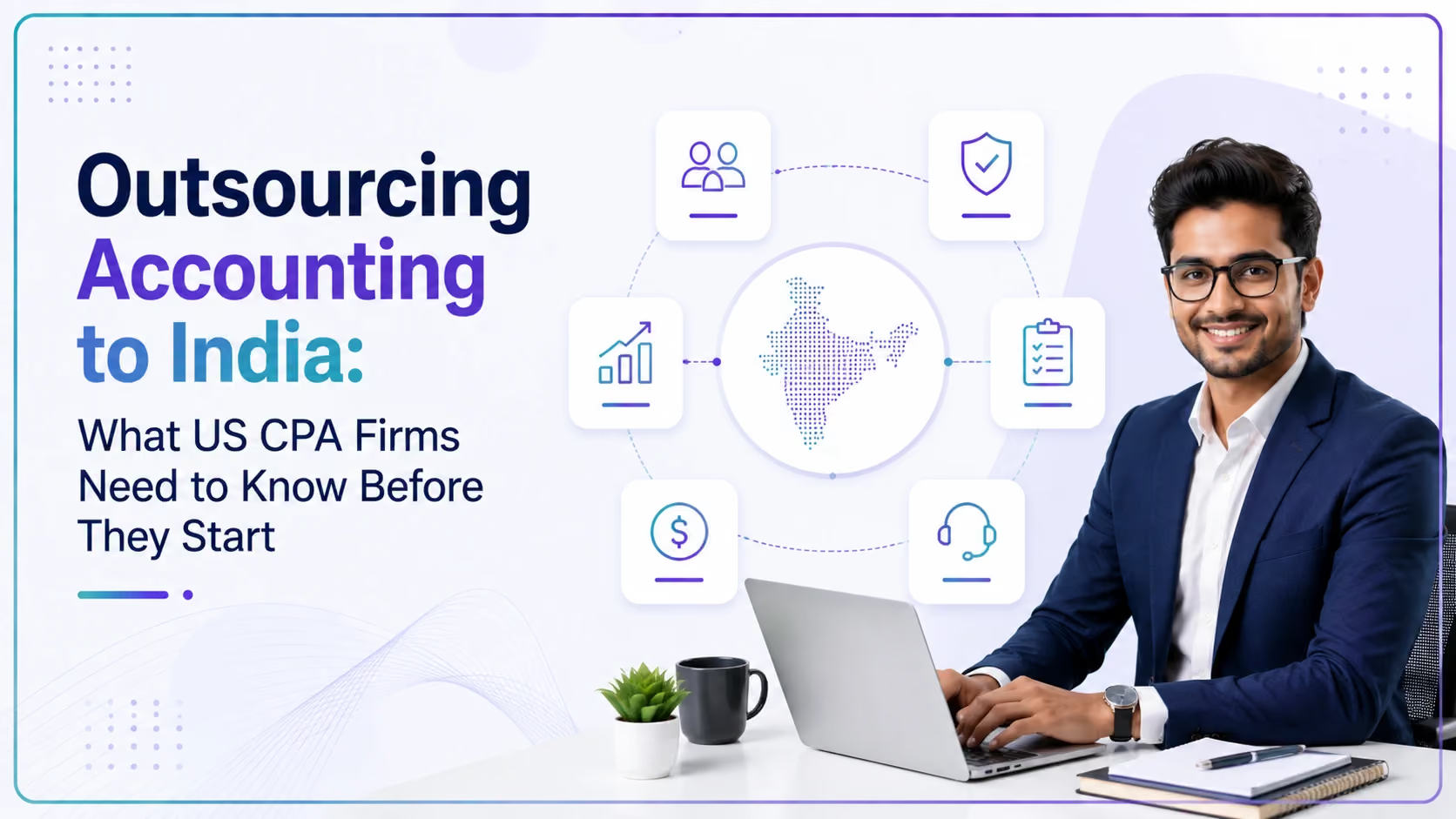
Outsourcing Accounting to India: What US CPA Firms Need to Know Before They Start
India is where most US CPA firms end up when they get serious about offshore accounting.
Not because it is the only option. But because the combination of accounting talent volume, English proficiency, US GAAP familiarity, cost efficiency, and a mature provider ecosystem has made it the dominant offshore destination for US accounting work for over a decade.
This guide covers what outsourcing accounting to India actually looks like from a US CPA firm's perspective. Not the marketing version. The operational reality: what transfers well, what requires careful setup, what the cost savings actually look like, and what to verify before you commit to any India-based provider.
Why Do US CPA Firms Outsource Accounting to India?
Three factors combine to make India the most common choice for US CPA firm outsourcing.
Talent volume that does not exist anywhere else.
India produces over 300,000 commerce and accounting graduates annually. A significant and growing portion of those graduates enter accounting and finance roles specifically targeting US firm workflows as a career pathway. The supply of qualified candidates is large, growing, and trained at a standard that is difficult to replicate in other offshore markets at the same cost.
Cost savings that are real and consistent.
A fully loaded US staff accountant costs $75,000 to $120,000 per year depending on role and market. An equivalent India-based dedicated professional engaged through a structured provider costs $18,000 to $42,000 per year. The 40 to 55% savings are not estimates or best-case scenarios. They are what firms report consistently after 12 months of engagement. The US figures include FICA, health insurance, 401k match, PTO, recruiting fees, and training costs that the India-based model eliminates.
US GAAP and tax training infrastructure that is specifically built for this.
India has a well-developed training ecosystem for US accounting work that does not exist in most other offshore markets at comparable scale. Providers like Etisson train professionals on US GAAP, specific IRS forms, and the software platforms US CPA firms actually use. This is not generic accounting training. It is US-workflow-specific preparation that reduces the onboarding
ramp-up period significantly and produces professionals who understand your review process from week one.
What Accounting Work Do US Firms Send to India?
The range of work that transfers well to India-based teams covers most of the production accounting stack.
The pattern is consistent with any offshore arrangement: production work transfers, judgment and client relationships stay internal. India-based teams handle this split well when the provider has genuine US-specific training and the firm has a documented review process.
How Much Do US Firms Save by Outsourcing Accounting to India?
The savings are real, consistent, and documented across the market. Here is a role-by-role breakdown reflecting current 2026 market rates.
For a firm replacing two US bookkeepers with two India-based dedicated professionals, the annual savings typically run $90,000 to $130,000. That is real margin that can be reinvested in advisory capacity, partner compensation, or firm growth initiatives without any reduction in service quality for clients.
What Are the Quality and Communication Realities of India-Based Teams?
This is where the honest conversation matters most, because the marketing version skips the friction. Here is what you actually encounter.
English proficiency is high but the communication style requires adjustment.
Written communication from India-based accounting professionals is typically very strong. Emails, task updates, and file notes are clear and professional. Spoken communication in calls is generally clear, though accents vary. In practice, this is almost never a problem because the majority of communication in a well-structured engagement is written. Daily task boards, file notes, and asynchronous updates handle most of the workflow. Calls are for complex discussions, not routine updates.
Time zone requires a deliberate handoff process, not just goodwill.
India Standard Time is 9.5 to 13.5 hours ahead of US time zones. This means real-time collaboration during your business day is limited. The solution is a structured daily handoff: you assign tasks at the end of your US business day, the professional completes them overnight, and the output is ready for your morning review. This is not a workaround. It is a workflow that most firms adapt to within two to three weeks and often come to prefer because work is complete before they start their day.
US-specific training varies significantly between providers.
Some India-based providers offer strong, specific US GAAP and IRS-form training. Others offer general accounting training and assume US-specifics will be absorbed on the job. The difference in first-month output quality between a well-trained and a generically trained professional is significant. Ask for the specific training curriculum. Name the forms. Name the software. Name the US GAAP concepts covered. Vague answers are a signal.
Work quality is high when your review process is structured.
The firms that report poor quality from India-based outsourcing almost always had weak review processes before they outsourced. The errors that became visible offshore were also happening internally. They just became more visible when the production was external. Strong review checklists are non-negotiable in any accounting firm regardless of where staff is located.
What Security and Compliance Standards Should India-Based Providers Meet?
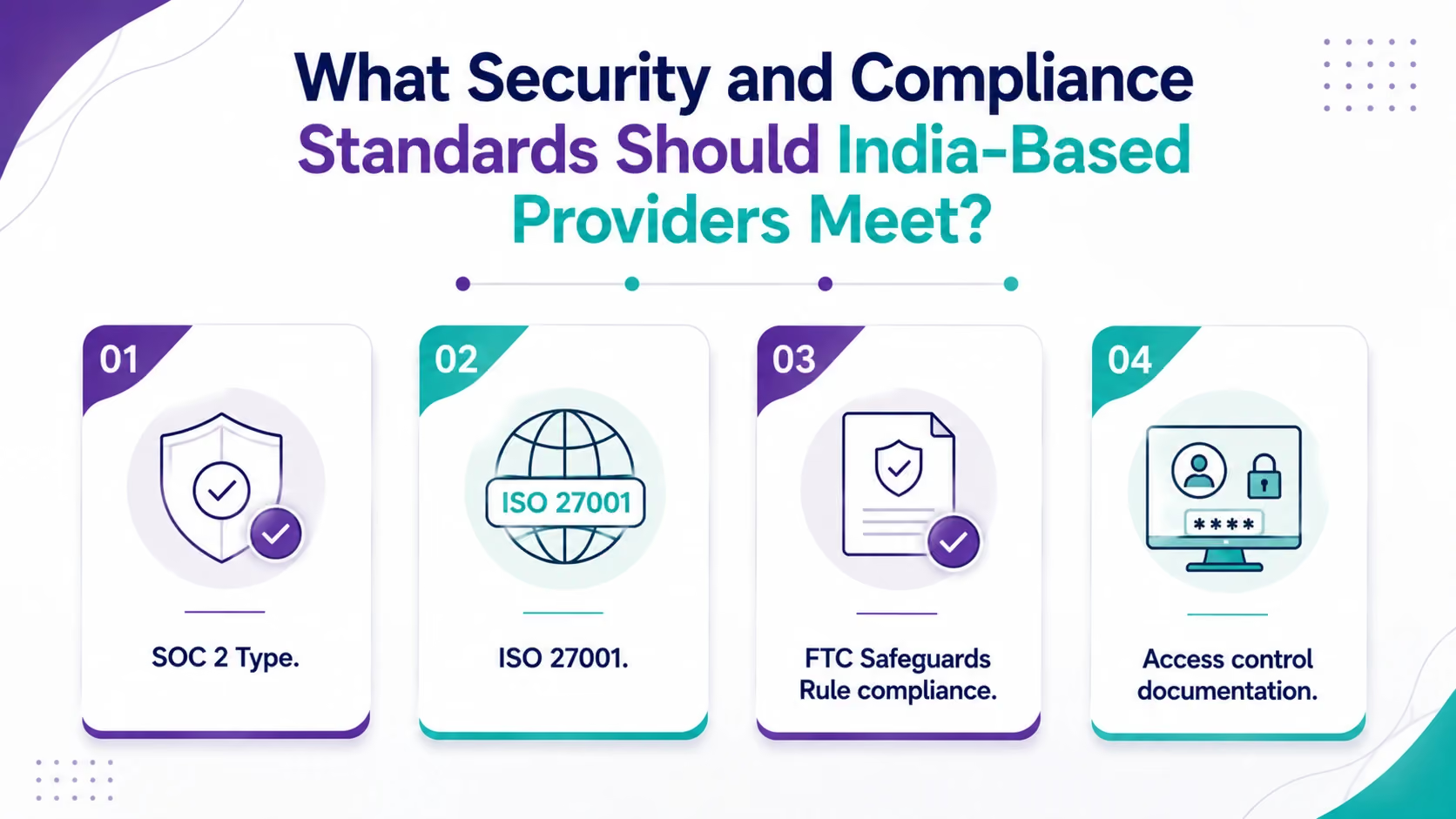
Your clients' financial data is subject to the same security requirements regardless of where it is processed. Your India-based provider must meet the standards your firm is required to uphold under US law.
SOC 2 Type II.
This is the standard security attestation for service organizations handling sensitive data. A SOC 2 Type II report covers the provider's controls over security, availability, processing
integrity, confidentiality, and privacy across a defined audit period. Ask for the actual report, not a claim that they are working toward certification.
ISO 27001.
The international information security management standard. Common among India-based providers that serve US and UK accounting firms. Indicates a documented and auditable information security program that has been independently verified.
FTC Safeguards Rule compliance.
The FTC Safeguards Rule requires your firm to ensure that third parties handling client financial information maintain appropriate safeguards. This applies to your offshore provider. You need to document that they meet the standard. You cannot rely on assumptions or verbal assurances.
Access control documentation.
Ask specifically about who at the provider's organization has access to your client files. Access should be limited to the professionals assigned to your account. Ask for their access control policy in writing. This is a basic question. Any provider that cannot answer it clearly has not built proper data governance.
How Does Outsourcing to India Compare to the Philippines?
Both India and the Philippines are credible offshore destinations for US CPA firm accounting work. Here is an honest comparison without a preferred conclusion.
Factor India Philippi
The choice between India and the Philippines is less important than choosing the right provider within either market. A strong India-based provider with high retention, documented security certifications, and US-specific training consistently outperforms a weak Philippines-based provider regardless of the country's general reputation.
Focus on the provider criteria. Evaluate the country as a secondary factor.
A Real Scenario: A Texas Firm Switching to an India-Based Dedicated Team
A CPA firm in Austin with 11 staff had been using a US-based domestic outsourcing service for two bookkeepers for 18 months. The quality was acceptable but the cost was high, approximately $7,200 per month for the two professionals combined. The domestic provider also had 30% annual staff attrition, which meant the firm had gone through four different assigned professionals in 18 months and was perpetually resetting the client-familiarity learning curve.
They switched to two Etisson dedicated bookkeepers. Total engagement cost: $3,800 per month. That is a $3,400 per month reduction, or $40,800 annualized.
Both professionals were onboarded in 48 hours. Client-file familiarity was at full working speed by week three. The daily handoff process took the firm's operations manager about two weeks to adapt to. After that, she described it as better than the US model because work was complete before she arrived each morning.
At the 12-month mark, neither of the two Etisson professionals had rotated out. The firm has since added a third Etisson professional, a senior accountant handling controller-level close for four mid-size business clients.
How Etisson's India-Based Team Works with US CPA Firms
Etisson is based in India and serves US CPA firms exclusively. Our professionals are trained on US GAAP, IRS forms, and the software platforms CPA firms use: QBO, Xero, Drake, ProConnect, UltraTax, and Karbon.
Every engagement uses the dedicated model. Your professional works exclusively for your firm under your review process. Onboarding takes 48 hours from agreement. The 40-hour free pilot lets you evaluate real work output on your actual client files before any financial commitment.
FAQs
Is outsourcing accounting to India reliable for US CPA firms?
Yes, when the provider has strong US-specific training, documented security certifications, and a dedicated model. Hundreds of US CPA firms use India-based teams for production accounting work reliably.
How much do US firms save by outsourcing accounting to India?
Typically 40 to 55% versus a fully loaded US hire. A staff bookkeeper saves $49,000 to $69,000 annually. A senior accountant saves $55,000 to $80,000.
What accounting software do India-based professionals use?
Strong India-based providers train on the platforms US CPA firms actually use: QuickBooks Online, Xero, Drake, ProConnect, UltraTax, CCH Axcess, and Karbon.
How do you handle time zone differences with an India-based team?
Through a structured daily handoff process. Tasks are assigned at the end of your US business day, completed overnight, and ready for morning review. Most firms adapt within two to three weeks.
What security certifications should India-based providers have?
SOC 2 Type II and ISO 27001 are the two standards to require. Ask for the actual certificate documents, not marketing claims or webpage statements.
How is outsourcing to India different from outsourcing to the Philippines?
India is typically 15 to 25% less expensive for comparable roles. Both countries have strong English proficiency and US accounting training ecosystems. Provider quality within each country matters more than the country itself.
Does Etisson work with small CPA firms?
Yes. Etisson works with firms from solo CPAs to 25-person practices. The 40-hour free pilot and 48-hour onboarding lower the barrier for firms making their first offshore hire.
Ready to see what an India-based professional looks like inside your firm?
Start your 40-hour free pilot: https://meetings.hubspot.com/nick2204
.avif)