

Blog Summary / Key Takeaways
- Outsourcing tax preparation to India adds preparer capacity for busy season, while your CPA still reviews and signs every return.
- Start with simple individual returns, then add business returns after a clean cycle. Keep multi-state and high-judgment returns in house.
- India is 9.5 to 10.5 hours ahead of US Eastern Time, so work can move overnight if you plan the daily handoff.
- Section 7216 requires written client consent before return information goes to a preparer in India.
Quick answer: Outsourcing tax preparation to India adds busy-season capacity without permanent hires. The client signs a Section 7216 consent first, and your CPA reviews and signs every return.
Last updated: November 2026
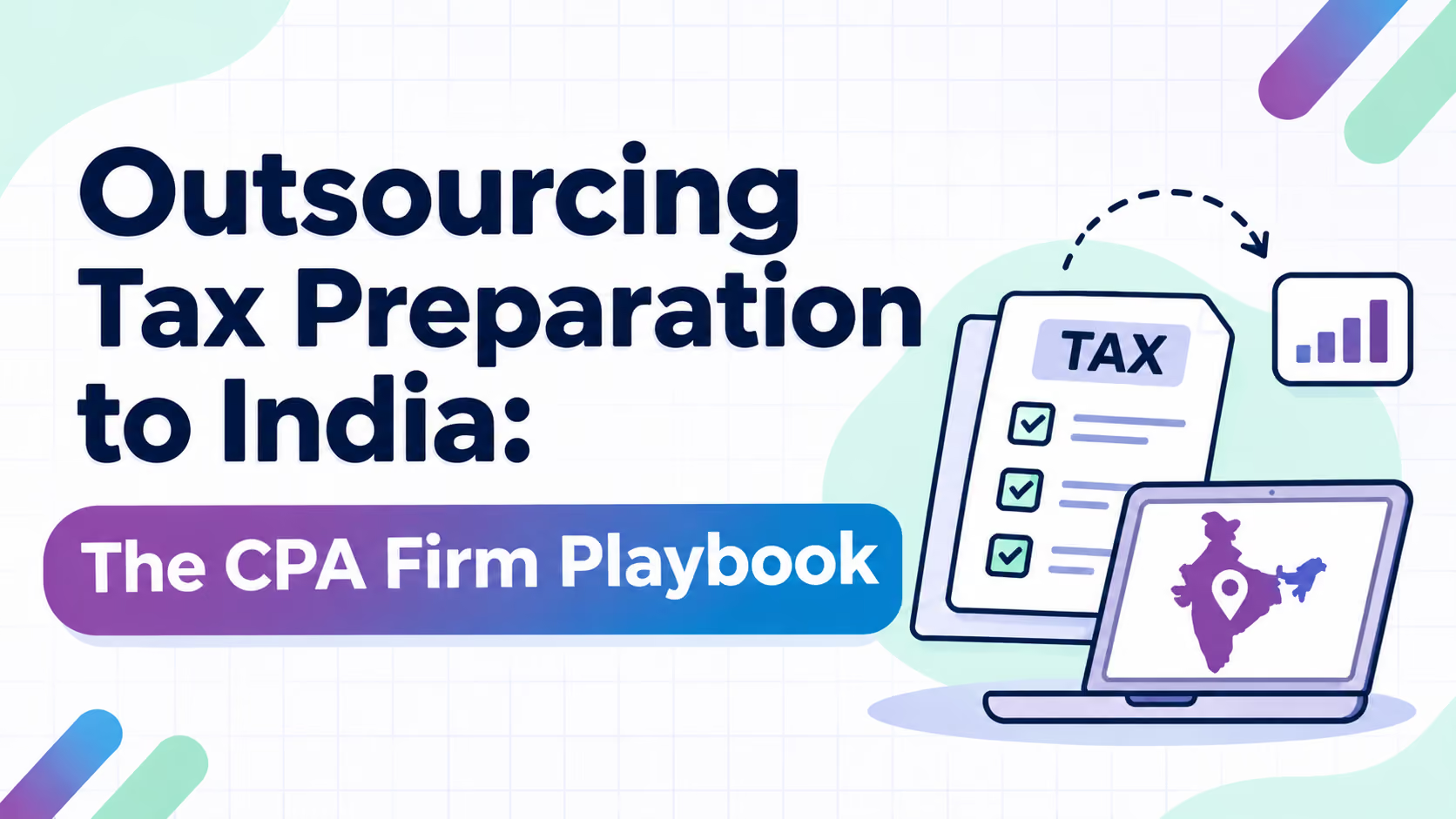
Outsourcing tax preparation to India gives a CPA firm extra preparers during busy season without permanent hires.
It also adds a time zone gap, a consent requirement, and a new review step.
Firms that plan for all three get a smooth season. Firms that skip one find out in March.
This guide covers the tax-specific side: which returns to send, how the daily handoff works, what compliance requires, what it costs, and how to review the work.
For bookkeeping and general accounting, see our guide to outsourcing accounting to India. For the full tax picture, start with tax preparation outsourcing for CPA firms.
Want to see how Etisson's India-based tax associates fit your busy season? Book a 15-minute demo and start with a free 40-hour pilot.
Why Do US CPA Firms Outsource Tax Preparation to India?
Firms outsource tax preparation to India to add preparer capacity for the Q1 peak without permanent hiring. The preparation work moves offshore.
Review, signature, and the client relationship stay with the CPA firm.
Most firms point to the same reasons:
- Peak capacity: extra preparers arrive for February through April and scale back afterward.
- No permanent headcount: you avoid recruiting and training seasonal hires every year.
- Overnight turnaround: work uploaded at the end of a US day can come back before the next one begins.
- Reviewer focus: your CPAs spend their hours on judgment work instead of data entry.
- A returning team: the same preparers can learn your checklists and come back each season.
For the hiring side of this decision, see busy season staffing for CPA firms.
Which Tax Returns Can You Send to India?
Most firms start with simple individual returns and add complexity over time. The right first batch is high in volume and low in judgment.
Start narrow and expand only after a clean cycle. For the full four-tier model, see our pillar guide.
How Does the Daily Workflow Work Across the Time Zone Gap?
India Standard Time runs 9.5 to 10.5 hours ahead of US Eastern Time, depending on daylight saving. That gap lets work move overnight.
Here is an example schedule in US Eastern standard time. Your actual hours depend on your provider.
The gap cuts both ways. Real-time questions wait for the next handoff. Agree on overlap hours for urgent items before the season starts.
What Does Compliance Require When Tax Preparation Goes to India?
You need the client's written consent under Section 7216 before you send return information to a preparer in India. India is outside the United States, so the offshore rule applies.
For Form 1040-series clients, Rev. Proc. 2013-14 sets the format and mandatory language of the consent. Our guide to the 7216 consent form walks through each requirement.
Unless the SSN is fully masked, your firm and the offshore preparer must both maintain an adequate data protection safeguard at signing and at disclosure.
IRS Publication 4557 tells firms to select service providers that maintain safeguards, require them by contract, and oversee them.
The penalties are serious. Section 7216 carries criminal penalties for knowing or reckless unauthorized disclosure. Section 6713 adds a civil penalty of $250 per disclosure, capped at $10,000 per year.
Need India-based tax preparers who work within your consent process? Talk to an Etisson expert about how it fits your firm.
How Much Does It Cost to Outsource Tax Preparation to India?
Outsourcing to India usually costs less than hiring seasonal US staff. The exact savings depend on your return mix, your volume, and how much review time the work needs.
Providers price in three common ways: per return, per hour, or a flat monthly rate for each dedicated team member. Ask for the model in writing before you compare quotes.
Compare providers on cost per finished, reviewed return, not on the rate card. Rework and reviewer hours belong in the math.
To model your own numbers, use the Etisson ROI calculator.
How Should You Review Returns Prepared in India?
Review every return the way you review in-house work, and add one checklist built for outsourced returns. Your CPA signs, so your CPA owns the result.
- Standardize the document format. Ask for the same organization on every return so reviewers know where to look.
- Require an open-item list. Every draft should arrive with unanswered questions listed in one place.
- Compare to the prior year. Variances show where preparation may have gone wrong.
- Log every error type. Track errors in the first season. Patterns show where to fix the checklist.
- Sample extra returns early. Review a larger share of the first batches, then taper as quality proves out.
Build this checklist before the first batch goes out. A review layer built under deadline pressure misses things.
How Do You Keep Client Data Secure When Returns Are Prepared in India?
Keep client files in systems your firm controls, and give the India team access to them instead of copies. Fewer copies means fewer places for data to leak.
Your firm also has its own duty. Tax preparers must follow the FTC Safeguards Rule, and IRS Publication 4557 explains the required plan elements, including oversight of service providers.
Ask any provider for these controls in writing:
- Access limits: each preparer sees only the clients assigned to them.
- Strong sign-in: multi-factor authentication on every system that holds client data.
- Encryption: client files are protected in transit and at rest.
- No local copies: preparers work inside your software or a secure remote desktop.
- Activity logs: you can see who opened which file and when.
- Clean exit: access ends the day a preparer leaves the team or the engagement ends.
A provider that cannot describe these controls clearly is not ready for client tax data.
How Do You Start With an India-Based Tax Team?
Start the process three to four months before busy season. A short, staged rollout beats a rushed one.
- Map your volume spike. Know which weeks and return types strain your team.
- Pick the first return types. Use the table above and start with simple 1040s.
- Vet providers. Use our guide to choosing a tax outsourcing provider.
- Set up consent. Get Section 7216 consents signed before any data moves.
- Run a pilot. Send a handful of returns and measure review time and errors.
- Set overlap hours. Agree on when your team and theirs are both online.
- Scale in tiers. Add return types after a clean cycle.
What Should You Measure During the Pilot?
Track a few numbers for every pilot batch. They tell you whether to scale, fix the process, or stop.
Scale only when review time drops and errors fall across two or three batches. One good batch proves little.
What Risks Come With Outsourcing Tax Preparation to India?
The main risks are manageable with planning. Each one has a clear control.
- Time zone delays: agree on overlap hours and a daily handoff.
- Data security: require written safeguards and keep files in your own systems where possible.
- Consent gaps: log every signed consent with its scope and expiry.
- Quality drift: keep sampling reviews after the first season.
- Team turnover: ask how the provider keeps the same preparers across seasons.

Add India-Based Tax Preparers for Busy Season
Etisson’s tax associates prepare in your software. Your CPA reviews and signs every return.
Real Results: An Accounting Firm That Added Offshore Capacity
Elevate Consulting Group (Phoenixville, PA). An outsourced accounting firm added offshore accountants at $2,000 to $2,500 per month. The onshore equivalent cost $6,000 to $10,000.
Etisson reports that per-resource cost fell 60 to 70%. Team capacity grew 3x with no new US hires.
The same model applies to tax season: add offshore capacity, keep review in house, and get client consent on file before any return data moves.
How Etisson Can Help
Etisson's India-based tax associates prepare returns in the tax software your firm already uses. Your CPA reviews and signs every return.
We tell firms up front what the consent and safeguard process requires, and we work within the review checklist you set.
See our tax and compliance services and how it works.
Etisson does not give legal advice. Have your counsel approve your consent language.
Conclusion
Outsourcing tax preparation to India works when you plan the whole workflow. Choose return types carefully, set up consent first, and build the review checklist before the season starts.
The time zone gap becomes an advantage once the handoff is routine. Start small, measure, and scale.
Want to see how Etisson's India-based tax associates could fit your next busy season? Book a 15-minute demo, and we will map it against your workflow.
FAQs
Why do US companies outsource to India?
US firms outsource to India to add capacity for busy season without permanent hires.
Work also moves overnight because of the time zone gap, so drafts are ready by the next morning.
How much does it cost to outsource tax preparation to India?
It usually costs less than seasonal US hires. Providers charge per return, per hour, or by monthly rate for dedicated staff, so compare cost per finished, reviewed return.
Is outsourcing tax preparation to India legal?
Yes. Section 7216 requires the client's written consent before you disclose return information to a preparer outside the United States, and the consent must be signed first.
Do I need client consent to send tax returns to India?
Yes. Treas. Reg. 301.7216-3 requires written client consent before disclosure to a preparer located outside the United States.
Which returns should I send to India first?
Start with simple individual 1040 returns. They follow repeatable steps. Add business returns after a clean cycle and keep multi-state and high-judgment returns in house.
How does the time zone difference work for tax preparation?
India is 9.5 to 10.5 hours ahead of US Eastern Time. Your team uploads at the end of the day, and drafts return before the next morning.
Who signs returns prepared in India?
In Etisson's model, the CPA firm's preparer reviews and signs every return. The offshore team prepares in your software and hands drafts back for review.